Category

Mariposa Reflections

Mariposa Reflections is a weekly online post by Gay Bradshaw that explores contemplative perspectives and their relationship to Animal and Earth revitalization. Weekly Reflections are stand-alone, but are aligned with ongoing course content of Mariposa Meditations.

Revelation is Relational

By Mariposa Reflections

I wonder what I ought to tell you about the friendship there was between me and a falcon? —Carlo Carretto, I, Francis
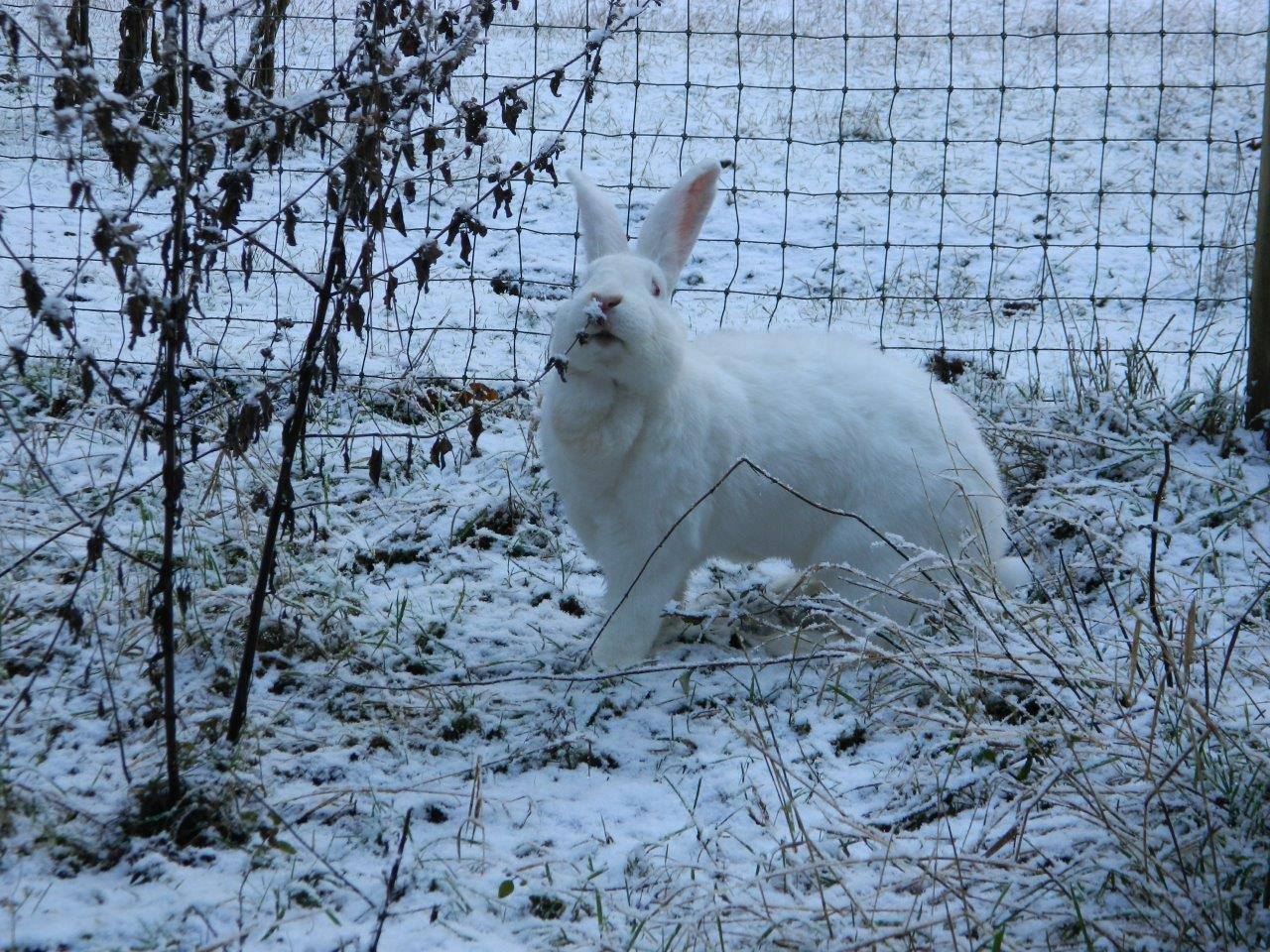
 

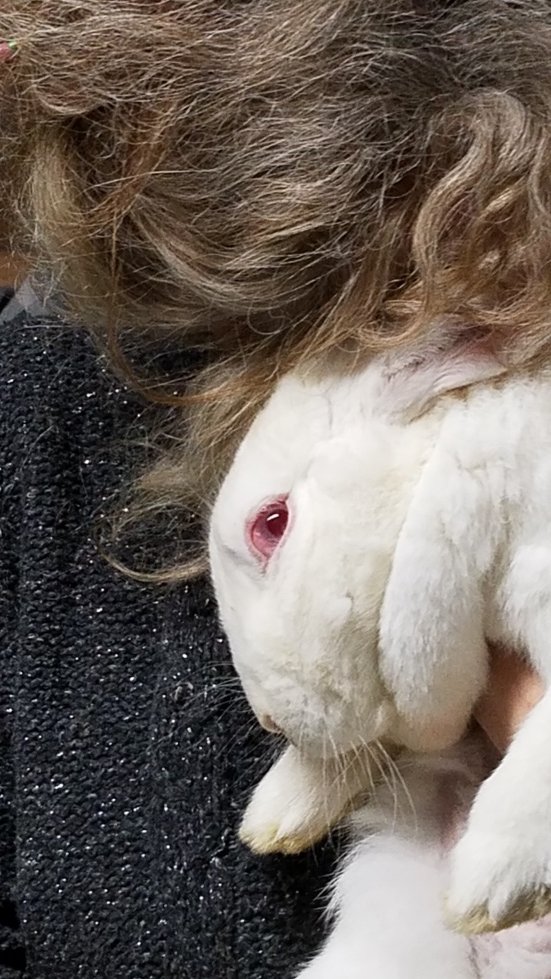
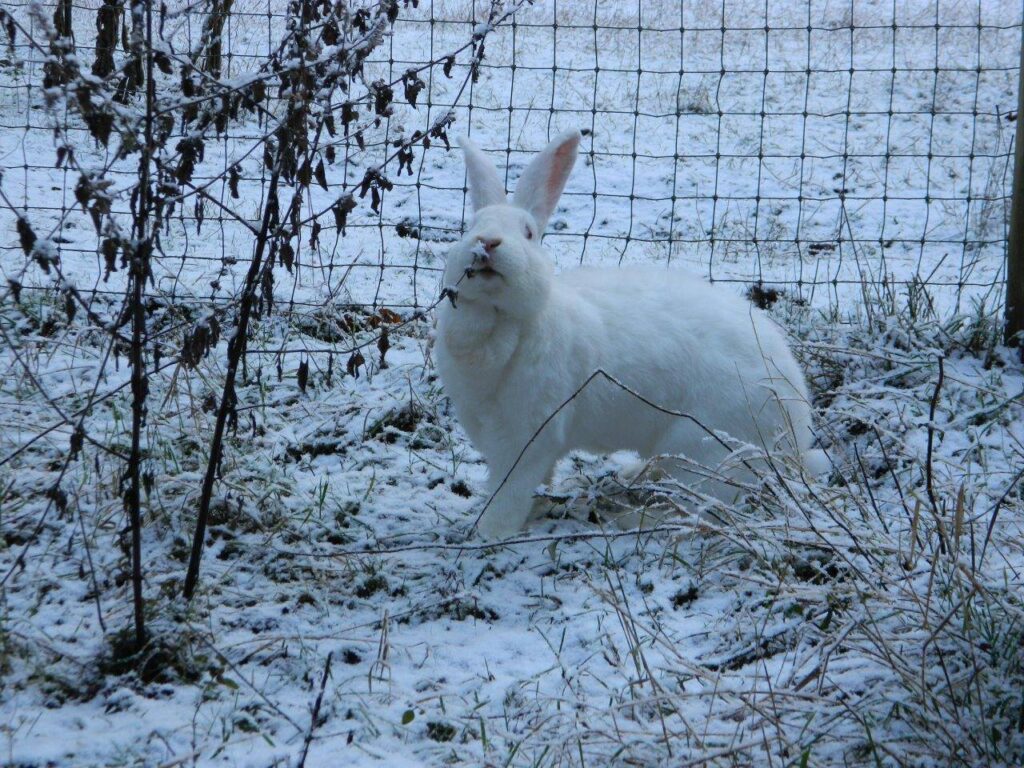
Last year, I completed a book. I am listed as the sole author, but the content and essence of the text were guided by a Rabbit. In many ways, the collaboration was no different than others. Diverse authors, including scientists, ascribe their discoveries to sources other than their own analytical operations. The fantastic science fiction of Felix Eberty sparked Albert Einstein’s theory of relativity. A coiled snake in the dreams of chemist Friedrich Kekulé led to his imagining of the benzene ring. Helen Cohn Schucman maintained that she played no part other than passive amanuensis for an unknown voice to create the dense spiritual tome, A Course in Miracles.

C.G. Jung and other seers attribute these exchanges to expressions of the psyche’s vast, fluid nature which is inextricably connected to the entirety of life. While the material world may appear as an assemblage of individual entities embedded in empty solitude, in actuality we live in William James’s world of accidental fences which, one by one dissolve into the authentic matrix of Nature’s unseen world.

Usually, when the word “Rabbit” or other Animal name is used, there is an intrinsic objectification and diminution. What is said or written is instantaneously subjected to a different set of inferences and judgments relative to those associated with humans. But as our species is slowly learning—whether from science’s admission of cross-species neuro-comparability, traditional Indigenous views, or personal experience—judgments based on externalities alone are misguided and incomplete. Fences might make good neighbors, but their separation is illusory. The ego is a remarkable magician whose masterful sleights of hand create interior and exterior barriers and boundaries which give the appearance of such solidity, such stability and permanence. Yet even the most seemingly impregnable walls inevitably crumble, fumble, and disappear into the dusty arms of mother Earth.

While my co-author navigated the world as a Rabbit, her form was only a medium of practical expression for operating in the material world. She heard and played life in the scale of Rabbit because that was how she was differentiated when she entered into form. Her life essence was communicated through a Rabbit interface of reflections and feelings much as mine enter through the form of human.

We spent twenty hours a day, side by side. For four years, we co-existed in what fifth century theologian Pelagius described, “the luminous pause between the two great mysteries.” When she was no longer able to use her back legs, we moved in together so I could provide her with what she was unable to do herself. Others knew us by our assigned names, yet we spent most of our time in life’s invisible reality. While they were intertwined in everyday tasks of cleaning, caring, and eating, our lives flowed and unfolded below the fractured, frantic waves of the materialed mind.

Her physical limitations were minor brush strokes on the limitless canvas where her lifelines were drawn. This boundlessness was extended to me. Each day, as she lay on the futon beside me, I read aloud what I had written as she diversely munched on kale, Italian parsley, cilantro, and wild blueberries which had become staples because of other health issues.

I do not think she understood individual words that made up my writing, but she understood the content and intent. She accessed meaning by listening carefully, fully present, her ears tuned to subtleties of rhythms, tones, and textures of phrases I spoke. The meaning was not only communicated to her verbally, but through embodiment. German philosopher, Ludwig Wittgenstein wrote, “The limits of language mean the limits of my world.” We became freed from this constraint because our language did not rely on words.

I was awed that she cared so much to push through my layered shell of human conditioning to the “deep I.” Her dedication was transformational for the both of us. She became almost translucent from the radiance that grew from within. Our coordinated internal shifts affected how we heard each other, our respective senses silently directing toward and sensitive to any subtle movement in each other’s field. I unconsciously and automatically adjusted my perceptions as I listened to her wordless reflections. My writing was fed in part by our interactions, but largely informed from the shared timeless space we occupied together. From here, thoughts would shape and percolate upward, differentiating as they entered into my human mind, finally rendering as words spilled out onto various pages.

She not only changed my life, Tommy changed my reality. She showed me that an individual self does not exist in the singular. While immersed in Nature’s beauty, humans egregiously mistake this diversity as difference. It is only when we understand that differences in form are nothing more than glove to hand, that the miracle of Nature’s magnificent splendor is realized. Beneath these dazzling forms is the one. The bodies we see and touch are merely diverse guises. When we gaze at the rugged face and torso of a hundred foot Ponderosa Pine and realize that his self is intermingled with our own, we are awestruck. This revelation is similar to the discovery that one is not a single Herring, but an entire school of Herrings, not one Starling, but the entire murmurating flock painting the sky. Our authentic self, the true self, emptiness, the Christ, Buddha nature, presence or however it may be described is, by definition, plural. “I” is indivisibly “we” and revelation, relational.

~ Dedicated to Tommy ~

Mariposa Reflections is a weekly e-post paired with Mariposa Meditations, a biweekly online Nature mindfulness and meditation gathering. Sign up here to receive weekly Mariposa Reflections. Learn more and register for Mariposa Meditations here.
Elephants and Existence

By Mariposa Reflections

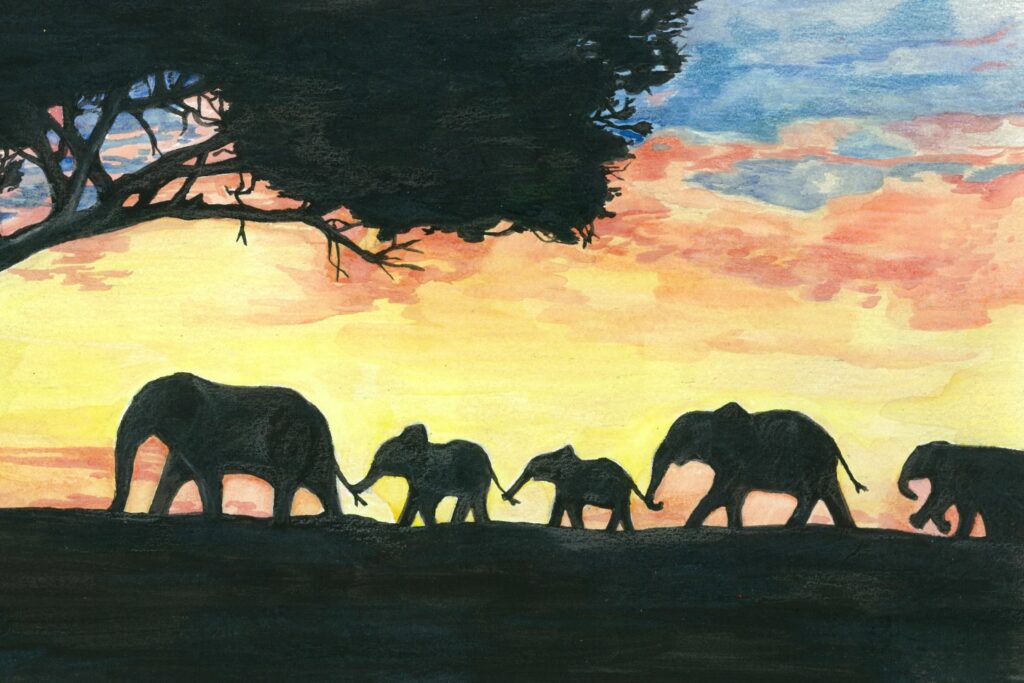
A s we saw before, moments of deep love can break through internal walls and release us from the ego mind. This story of Elephants and their human family shows how it is possible to live like this, without difference, and create a culture of oneness.


The David Sheldrick Wildlife Trust is located outside Nairobi, Kenya. For more than six decades, they have rescued injured and orphaned Elephants, now numbering over 260 individuals. After re-joining Wild herds, many have gone on to further revitalize their ancient culture by giving birth to infants as they once were. The vast majority of rescued babies would perish without the skills and heart of the Trust. Not only are their lives saved, but the sensitive and wise care developed by founder Dame Daphne heals physical and psychological wounds enabling the orphans to be reintroduced and become part of Elephant culture repair.

The Trust emulates the natal family, the nucleus of Elephant society, which is typically comprised of a leading matriarch and group of allomothers (aunties) who shelter and care for their own and other infants. From conception onward, the brain, mind, and ethics of an infant pachyderm are shaped not by one, but an entire constellation of Elephant minds and bodies. At the Trust, infant care is trans-species, made up of human and Elephants who recreate a natal quilt. The ties that bind transcend species.

Recently, three former orphans who previously had recuperated and rejoined other Wild Elephants arrived at the Trust. This in itself is not unusual. Often, many ex-orphans pay a visit and introduce their children to their human family. This day, Yatta, Chyulu, and Sidai, three ex-orphans now grown, came with their children, Yetu, Yoyo, Yogi, Cheka, Sita, and the newborn Silas. The Elephants’ visit, the Trust carers were soon to discover, was more than the makings of a baby shower.

Sidai had a poison arrow wound in her rump. The Elephants had turned to their human family for help in this life and death situation. Without medical assistance, it was likely that the poison eventually would kill Sidai. Immediately, medical care was mobilized. Despite being darted with a sedative that made Sidai lie on the ground, the other Elephants remained calm, fully cognizant of what was going on. They gathered round while Sidai received necessary care. Thankfully, the poison had not found its lethal way and she recovered.

In the wake of her recovery, Trust carers reflected on what must have transpired. While they showed great joy at seeing their friends, the Elephants were nonetheless “gaunt,” indicating that the family had travelled a great distance under hardship. The Trust carers deduced that the Elephant mothers had been challenged by a difficult decision—make the trek to the Trust for vital medical care or stay near a stable source of water vital to the vulnerable infants. The mothers chose wisely.[1]

There are so many layers to this glimpse of life, but perhaps first and foremost, the great love and trust the Elephants mutually share with human family and friends. Identity and self are unbounded by form, indeed beyond the concept of difference, a mental habit that is so deeply engrained in modern human culture, minds, and perception. We are literally programmed to see and judge immediately whether someone, something, is either this or that. This habit is not only unnecessary for living, it is also the root of widespread violence and suffering. There is a way, however, of perceiving and living without defining difference.

Instead of contracting into egoic “me” and “them,” we might train our gaze to see the whole without breaking it into pieces, as we might when admiring a Turkish rug that is rich in colors and textures, yet exists as one unbroken whole. Encounters and relationships then become the one-beyond-form experienced by two forms. This ethic of oneness is associated with the idea of “accompaniment,” whose etymological root relates to the Spanish compañero, “friend” and the Latin, ad cum panis, “to break bread.”[2]

Accompaniment is how a Leopard Seal in the Antarctic attended to a human diver she believed was in distress.[3] Although she diverted precious energy and time to an unrelated species with no expectation of a “return on investment,” the Leopard Seal existed and acted beyond ego in the space of oneness. Similar to the Seal, the Trust carers and the Elephants were not reaching out to someone else, but to themselves. Elephants, Seals, and other nonhumans are born into and come from oneness. As American psychologist William James described: “There is a continuum of cosmic consciousness, against which our individuality builds but accidental fences, and into which our several minds plunge as into a mother-sea or reservoir.”

Learn More

[1] The David Sheldrick Wildlife Trust. 2021.  Sidai’s Saga- and Her New Arrival. Retrieved from https://www.sheldrickwildlifetrust.org/news/updates/sidais-saga-and-birth-of-silas
[2] Watkins, M. 2019. Mutual Accompaniment and the Creation of the Commons. Yale University Press.
[3] Bradshaw, G.A. 2021. Leopard Seal Compassion. Retrieved from https://omere.ca/essays/leopard-seal-compassion

~ Dedicated to Tommy ~

Mariposa Reflections is a weekly e-post paired with Mariposa Meditations, a biweekly online Nature mindfulness and meditation gathering. Sign up here to receive weekly Mariposa Reflections. Learn more and register for Mariposa Meditations here.
The Duck and the Ego

By Mariposa Reflections

T his week we delve further into what the experience of ego and egolessness might be, and how our nonhuman kin, while living with a full sense of self, are not compelled to close over natural openness with the shell of separation.


In the third chapter of Lewis Carroll’s Alice’s Adventures in Wonderland, Alice and a medley of Animals stand together trying to figure out how to get dry. [1] They had all become drenched to the skin from slipping into the pool of tears that was created by a distraught young Alice when she had eaten a little cake and grew to “ten feet tall.” [2] The Mouse in the group had an idea of how to solve their soggy situation. His solution was to give a lecture on English history because history, the Mouse asserted, “is the driest thing I know.”

“Edwin and Morcar, the earls of Mercia and Northumbria,” the Mouse began, “declared for him: and even Stigand, the patriotic archbishop of Canterbury, found it advisable—

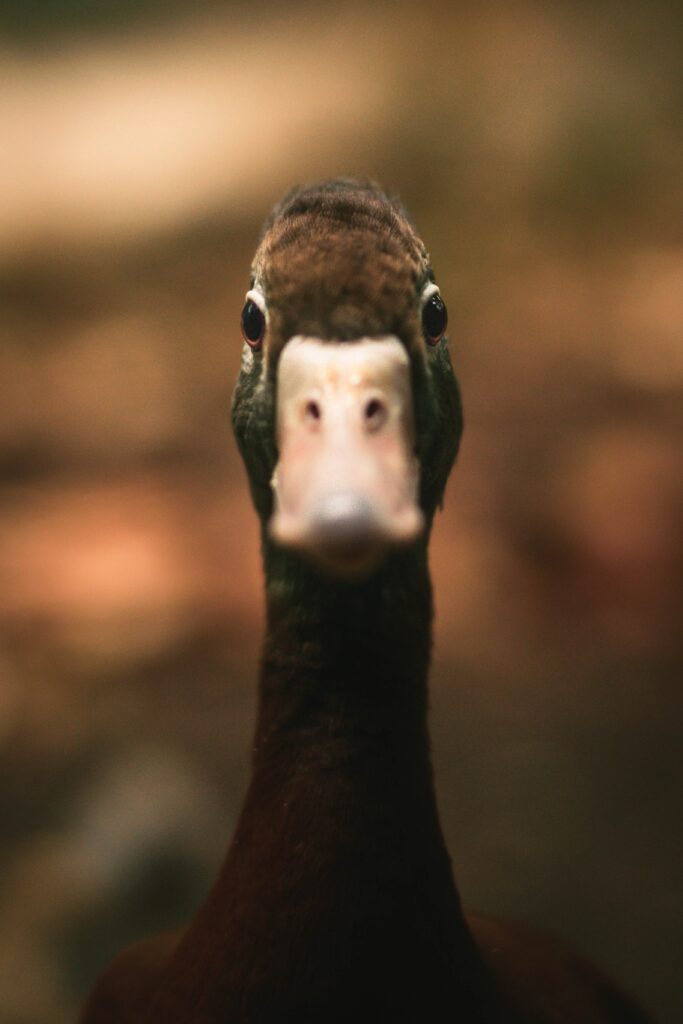
“’Found what?’ said the Duck. `Found it,’ the Mouse replied rather crossly: `of course you know what “it” means.’ `I know what “it” means well enough, when I find a thing,’ said the Duck: `It’s generally a frog or a worm. The question is, what did the archbishop find?’ “

Likely, the Duck would also question the meaning of another abstraction—“ego.” Although it may not be visible, the ego is something palpable that we experience whether we know “it” or not. Perhaps it’s easiest to grasp what the ego is by first experiencing what egolessness might feel like.

Think back to the feeling when, for example, you were walking down the street and suddenly, you see an old, dear friend whom you had not seen for many years, or, after waiting anxiously at the clinic to hear results of your Dog’s operation, he bursts through the door and runs into your arms. At these moments, everything in the mind seems to vanish. Pure joy breaks through any mental and emotional blocks. There is crystal clear connection. As Charlie Russell put it, “no one and nothing else matters.”[3].

But, too often, the ego steps back in and takes over. Almost instantly, even though your arm wraps around the shoulder of your long lost friend or as you and your Dog lovingly make your way home, old stories, worries, and schedules start to creep back and fill the mind. Before you know it, the sun of the golden present is covered by the preoccupying past and future. Moments of union—the indivisible us, the experience of a world beyond ego—are replaced by separating “yous,” “mes,” and “thems.” Ego resists taking a backseat in life.

Nonetheless, these tiny, but momentous, gaps between the fortressed ego and the spaciousness of awareness provide a taste of egolessness. They are breadcrumbs of realization which, if we follow, can lead us to life’s substrate of oneness. Unobstructed moments of our true self sans ego, which meditation, prayer, and mindfulness invite, are portals into unconditional love, a quality and state of egolessness.

As we heard the London teacher, Kendra, speak about the Gecko with whom she lives: “He always loves me just the way I am,” Animals are often described as showing unconditional love. Certainly, humans are rarely or never met with condemnation from a forest of Pines and Fir. Unless they have been abused or grievously harmed, nonhumans do not seem compelled to paper over others with labels and judgement—they retain an open, present self. As Dame Daphne Sheldrick testifies, their capacity to forgive, the refusal to don the armor of ego, is breathtaking:

“During the 50 plus years that I have been intimately involved with Elephants in Africa, and the rearing of over 80 orphans, I am astounded about how forgiving they are, bearing in mind that they are able to recollect clearly that their mother, and sometimes entire family, have perished at the hands of humans. . . .And since Elephants never forget (which is a fact), they demonstrate a level of forgiveness that a human would in all likelihood have difficulty in achieving.”[4] A decade later, the Sheldrick Trust has rescued 263 forgiving orphans.[5]

By relaxing into Nature consciousness—releasing ourselves from the grip of ego to re-join the rest of the unbroken cosmos—we become part of the unconditional love that surrounds us. When awareness is allowed to shine without the vigilance of ego, we begin to hear what the whispering wind and gaze of a Raven are telling us. We learn what it means to become Nature again.

Putting Practice into Action

While sitting in prayer or meditation, indoors or outside, explore if and how your perception of a Tree, your family Cat or Dog, or other being begins to shift. When you recognize that these beings are as (or more) aware and conscious as you, does this change how you behave? Share these ideas and your experiences with family and friends and discuss concrete ways in which Nature consciousness can infuse every day human life to support Nature.

Learn More

[1] Carroll, L. 1865. Alice’s Adventures in Wonderland. Macmillan.
[2] Slick, G. 1967. White Rabbit (song). https://www.youtube.com/watch?v=WANNqr-vcx0; retrieved 20 November 2021
[3] Bradshaw, G.A. 2020. Talking with Bears: Conversations the Charlie Russell. Rocky Mountain Books.
[4] Bradshaw, G. A..2009.  Elephants on the Edge: What Animals Teach Us about Humanity (pp. 115-116). Yale University Press.
[5] The David Sheldrick Wildlife Trust. 2021. Retrieved from https://www.sheldrickwildlifetrust.org/

Photo Credit: Biel Morro

~ Dedicated to Tommy ~

Mariposa Reflections is a weekly e-post paired with Mariposa Meditations, a biweekly online Nature mindfulness and meditation gathering. Sign up here to receive weekly Mariposa Reflections. Learn more and register for Mariposa Meditations here.

The Mountains Are In Us.

By Mariposa Reflections

W elcome to Mariposa Reflections! In our first post, we begin by exploring how the intersection of science and contemplative practices reveals the portal for deep connection with Plant and Animal kin. When mind and body relax and the thoughts and emotions to which we cling, fade, the I/other gap of separation created by the ego falls away and pure awareness emerges into the presence where Nature lives.


Let’s start out with these three quotes:

He loves me just the way I am.” – Kendra
She is there for anyone at any moment, with empathy and love.”- Andrew
No matter what happens, he lives in harmony, centered, and nonjudgmental.” –  Jeremy

Are these testimonies of love for a cherished friend, partner, or spiritual teacher? The answer is “yes” and “no.” Kendra, Andrew, and Jeremy are three humans talking about Animals in their lives: Kendra about her Gecko, Andrew, a White-Tailed Deer, and Jeremy, a Crane living on a Kenyan lakefront beach. Yet, they speak of something more than companionable care.

If you listen carefully, these descriptions echo such qualities as Buddhism’s metta (lovingkindness) in the Gecko, the Hopi value of nami’nangwa and Islam’s rahmah (compassion) in the Deer, and hózhǫ́, the philosophical heart of the Diné, in the Kenyan Crane. Their human friends agree – and so does science.

Among neuroscientists, finding qualities formerly assumed uniquely human is unsurprising. Animals are used routinely to study human minds precisely because we share comparable neuro-capacities. This scientific understanding was openly reified in 2005 with the diagnosis of Complex Post-traumatic stress disorder (C-PTSD) in free living Elephants, and seven years later, in 2012, when eminent neuroscientists and Nobel Prize winner Stephen Hawking declared that all vertebrate and invertebrate Animals are conscious. [1,2,3] But, there is much more to this realization. Fundamental species’ differences do not derive from unequal minds, but from how these minds are used. While human minds create thoughts that lead to guns and genocide, Salmon, Eagles, Elephants, and Oaks, do not. Why not? Animals and Plants feel and think, but they do not lose themselves in ego.

Eckhart Tolle defines ego in this way: the identification with form that includes thoughts, emotions, and the material body, all of which disappear with death. [4] When we identity with stories of past and future thoughts, emotions, and beliefs, we disconnect from the present. Our minds contract into a bubble of isolation, our ego, and our seamless connection with the world is cut. Our perception of Nature, experiences, and relationships are reduced to objects whose value and meaning are defined from inside our egoic fortress. Accumulated over time and maintained through custom and culture, ego became collectively codified as civilization, defining humanity as apart from and superior to Nature. In stillness and meditation, however, when ego retreats, pure awareness is allowed to shine in the unobstructed present. This is where the Animals live. This is where we re-discover that our true nature is Nature. This is where we listen and learn how to be Nature, again.

Surprisingly, science has ended up partners with contemplative traditions in dismantling the human ego. By demoting the primacy of the human species through its democratization of consciousness, science has also demoted the primacy of form. One species is no “better” than another species. One form is no “better” than another form. Fur, feather, skin and scale are merely beautiful, diverse costumes that temporarily clothe consciousness. This is what John Muir evokes when he wrote, “We are now in the mountains and they are in us.” [5]

Next week, we delve further into how the human ego affects connections with Nature consciousness.

Home Reflections

Sit or lie somewhere quiet, indoors or outdoors. When you are settled and comfortable, close your eyes and gently bring attention to your breath. Don’t try to change it- just lightly lay your attention on the in and out breaths. Notice any tension in your body, your shoulders, neck, legs, and use your out-breath to relax your mind and body. After a few minutes, sit or stand near a Tree or if indoors, bring up an image of a Tree you know, someone you may pass every day on the way to work or one who lives in your backyard. Or instead, you might listen and feel the wind. Refrain from thinking about the Tree or the Wind. Just keep relaxed and hold the image or sensation as you breathe naturally in and out. If your mind becomes active or emotions begin to rise, return to your breath, and then bring your attention back to the “real” or imaged Tree or Wind. Listen to the Tree (or feel the Wind). What do you hear? What are you experiencing? Try this practice over the week and watch if any shifts or changes in your perception develop.

Putting Practice into Action

Learn about your Tree by asking and listening in to the Tree to see s/he is in any danger or need. Support and explore what other Trees and Forests are in need of protection.

Learn More

[1] Bradshaw, G. A. (2005). Elephant trauma and recovery: From human violence to liberation ecopsychology (Doctoral dissertation, Pacifica Graduate Institute).
[2] Bradshaw, G. A. (2009). Elephants on the edge: What Animals tech us about humanity. Yale University Press.
[3] Low, Philip, et al. (2012). The Cambridge declaration on consciousness. Francis Crick Memorial Conference, Cambridge, England.
[4] Tolle, E. (2006). A new earth: Awakening to your life’s purpose. Penguin Group.
[5] Muir, J. (1911). My first summer in the Sierra. Houghton Mifflin.

Mariposa Reflections is a weekly e-post paired with Mariposa Meditations, a biweekly online Nature mindfulness and meditation gathering. Sign up here to receive weekly Mariposa Reflections. Learn more and register for Mariposa Meditations here.